 ENG
ENG
 INA
INA
Supporting Accreditation and Learning Quality, PS TIP FTP Unud Holds Workshop on OBE Preparation and Case Method / Team-Based Project Strengthening
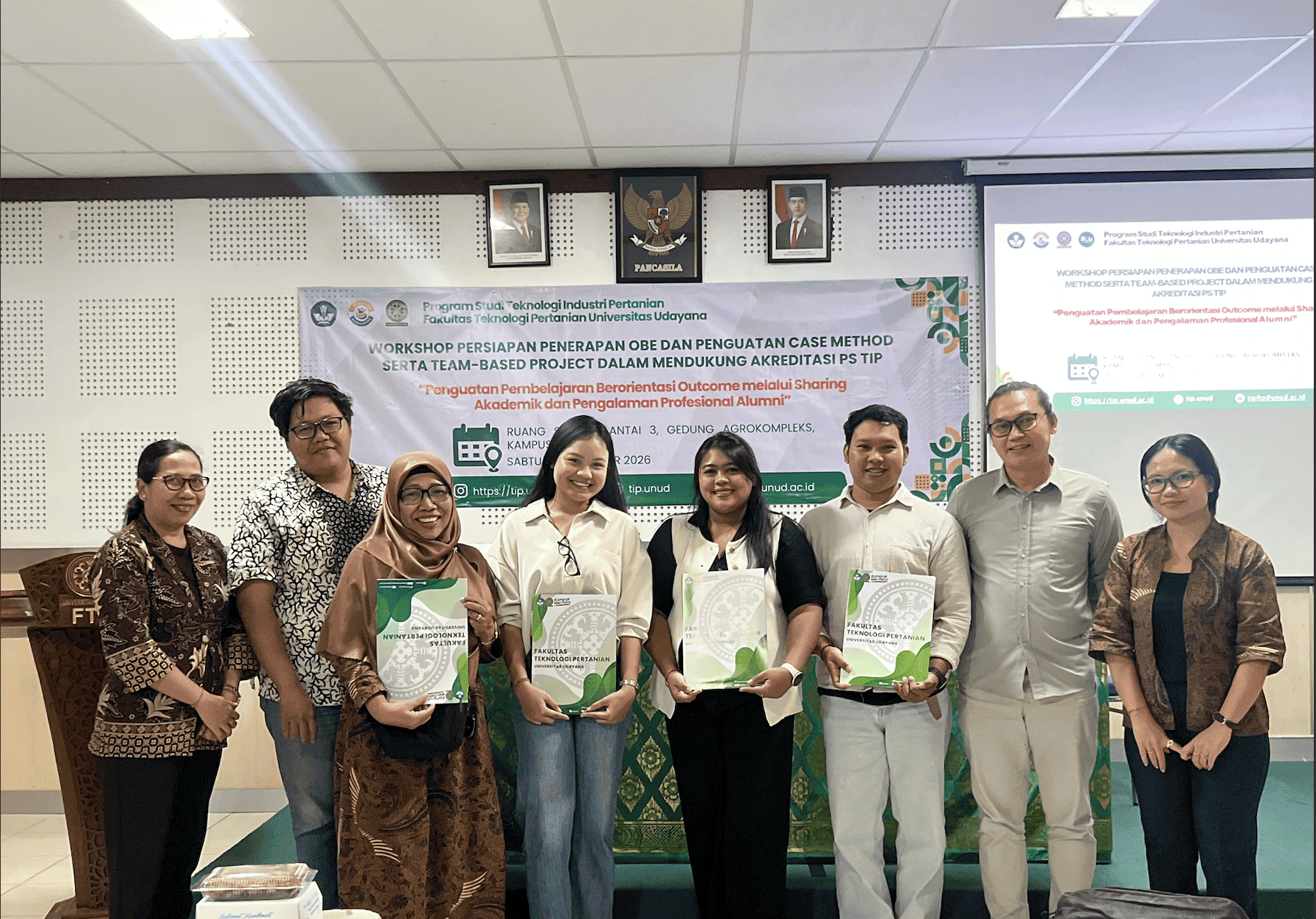
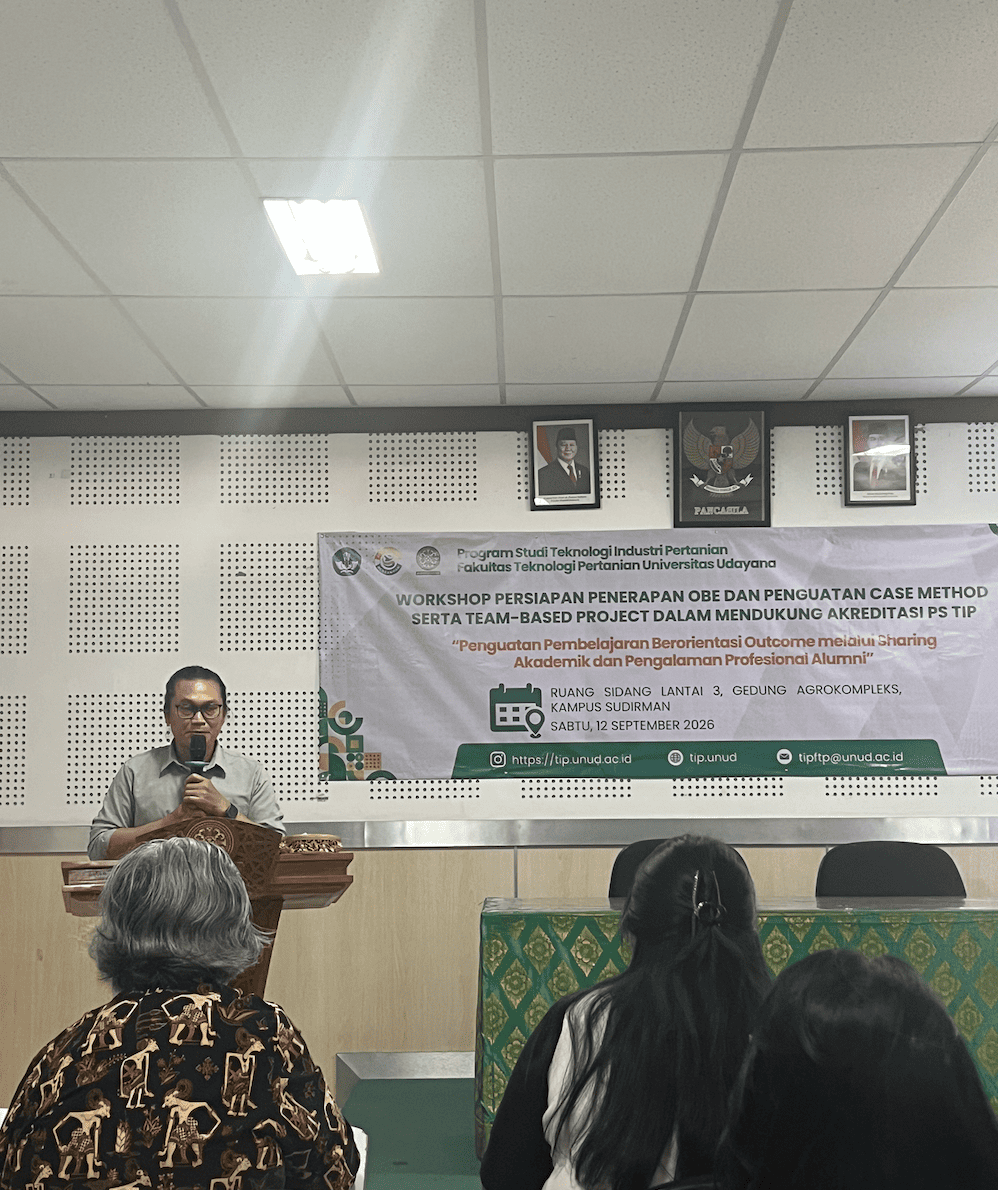
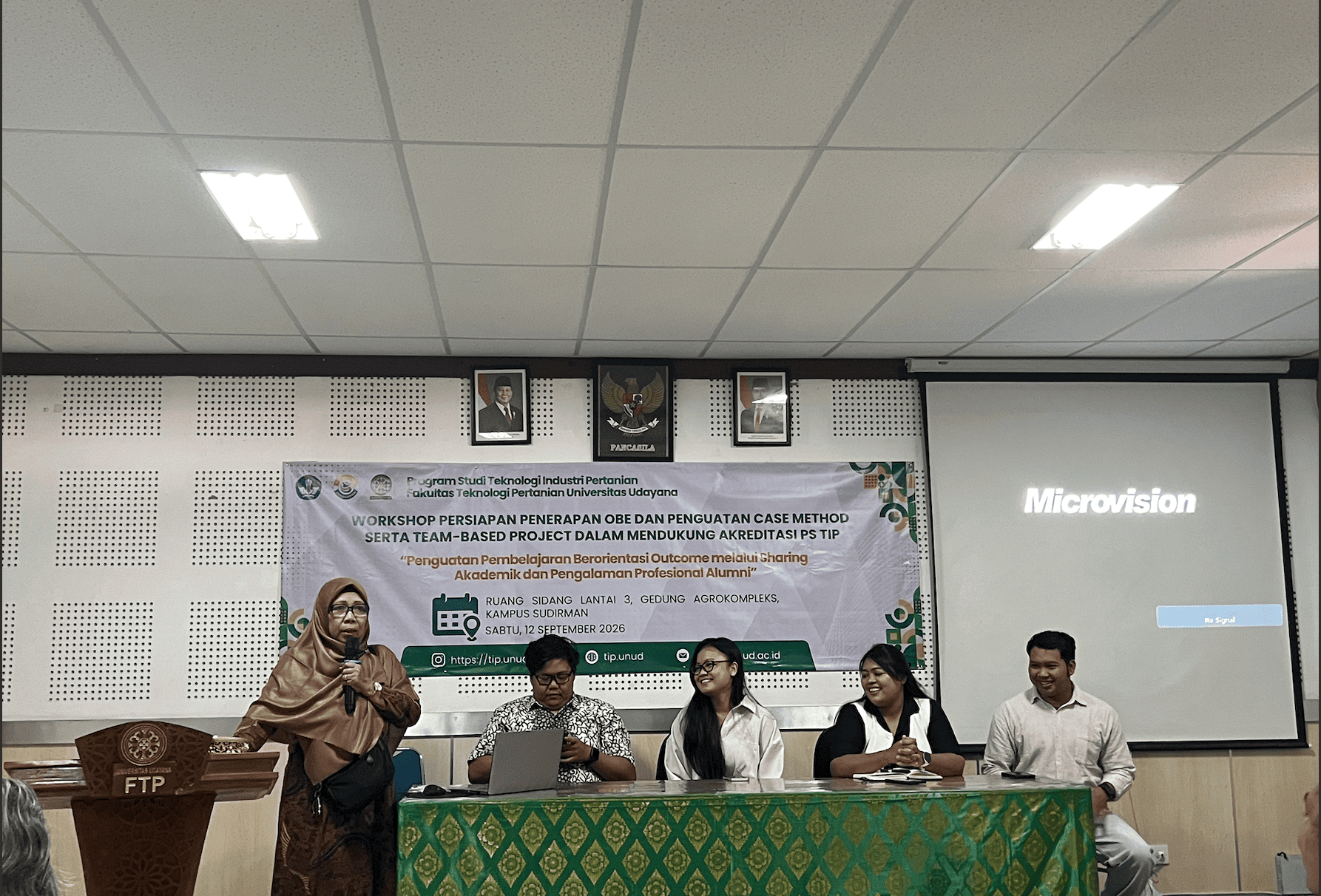
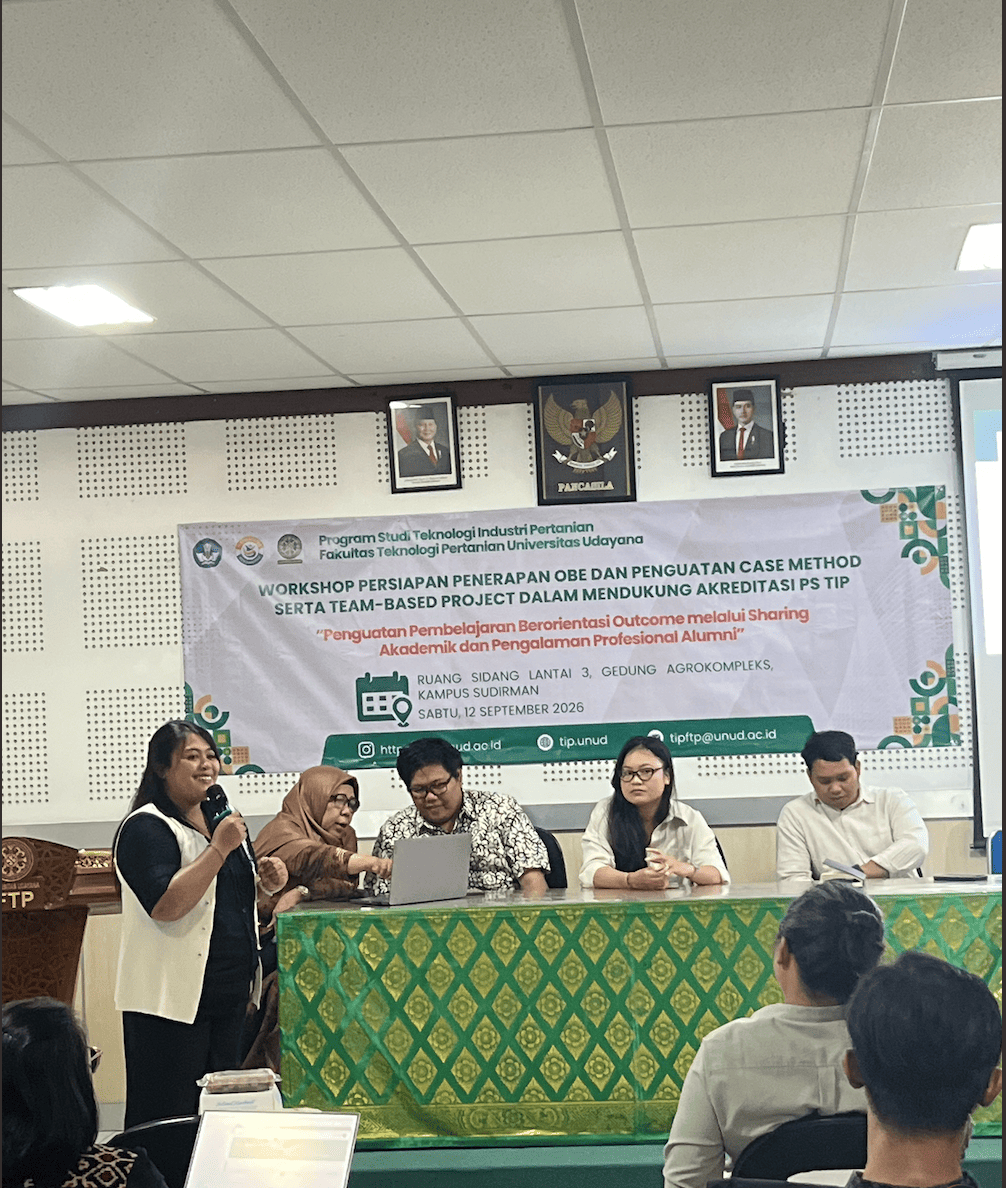
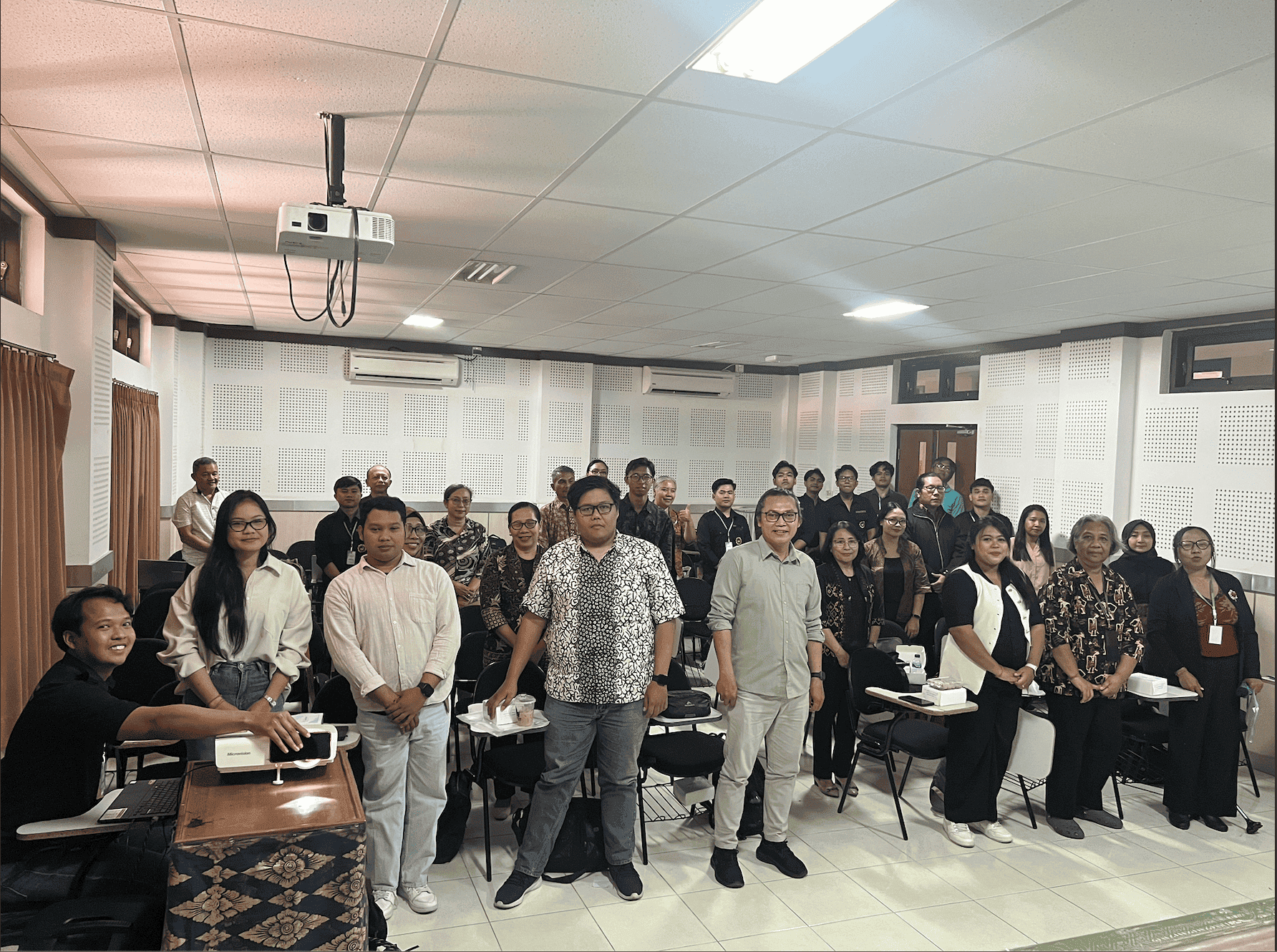
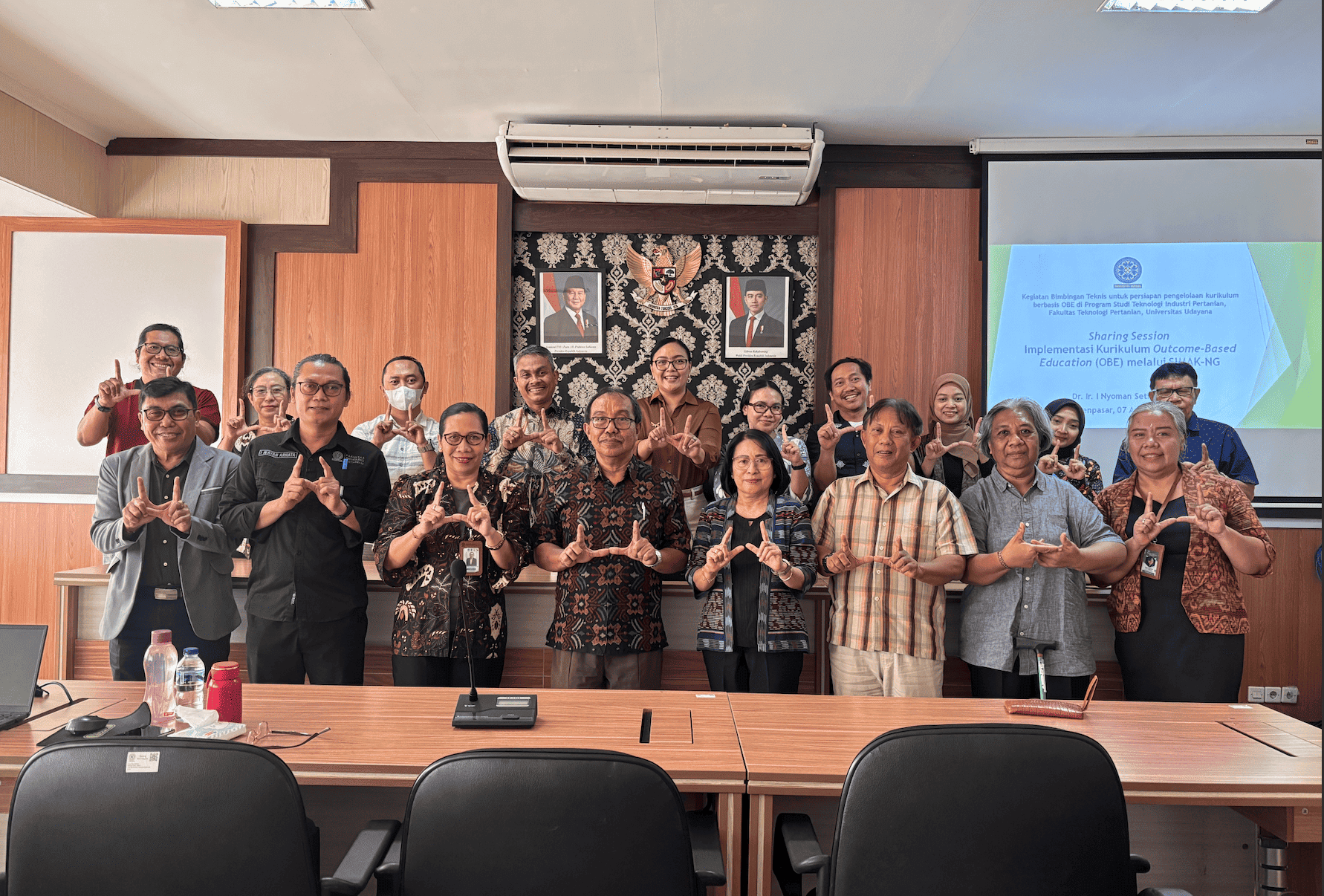
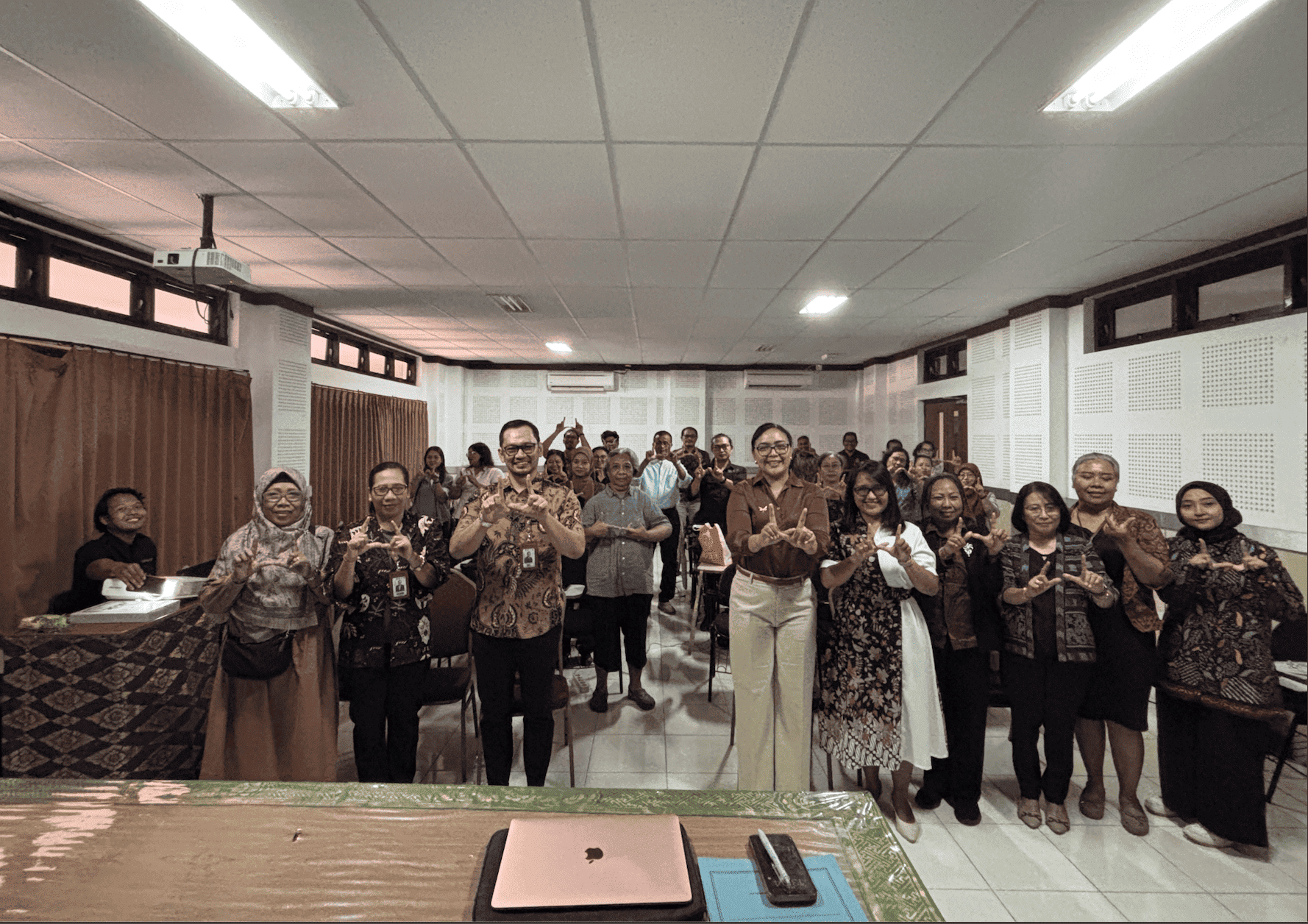
DENPASAR, SEPTEMBER 12, 2026 – In a continuous effort to enhance higher education quality and prepare for the LAM-PTIP accreditation process, the Agroindustrial Technology Study Program (PS TIP), Faculty of Agricultural Technology, Udayana University successfully held a Workshop on Outcome-Based Education (OBE) Implementation Preparation and Strengthening of Case Method and Team-Based Project. The event carried the theme "Strengthening Outcome-Oriented Learning through Academic Sharing and Professional Experiences of Alumni" and took place at the FTP Meeting Room, 3rd Floor, Agrocomplex Building, Unud Sudirman Campus, Denpasar.
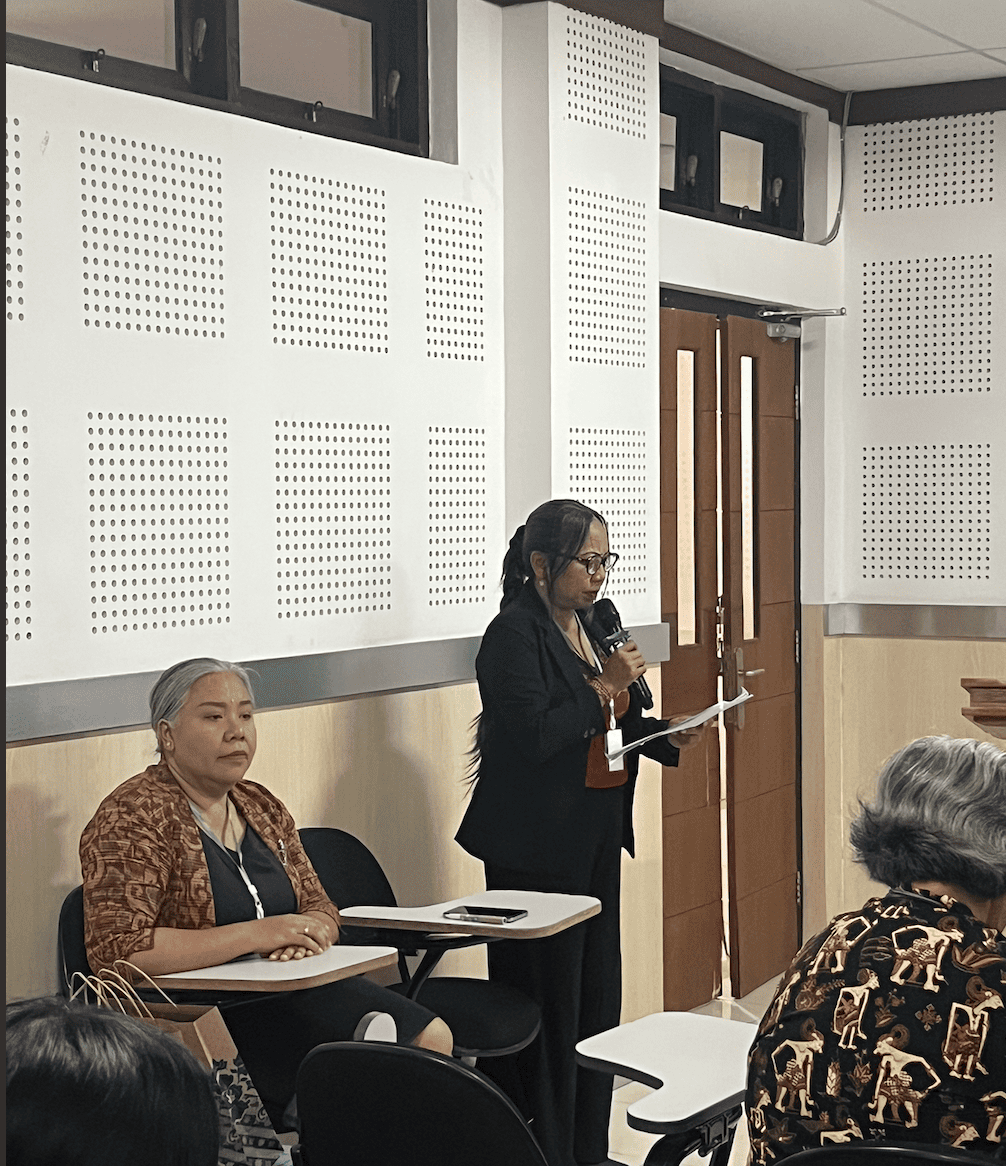
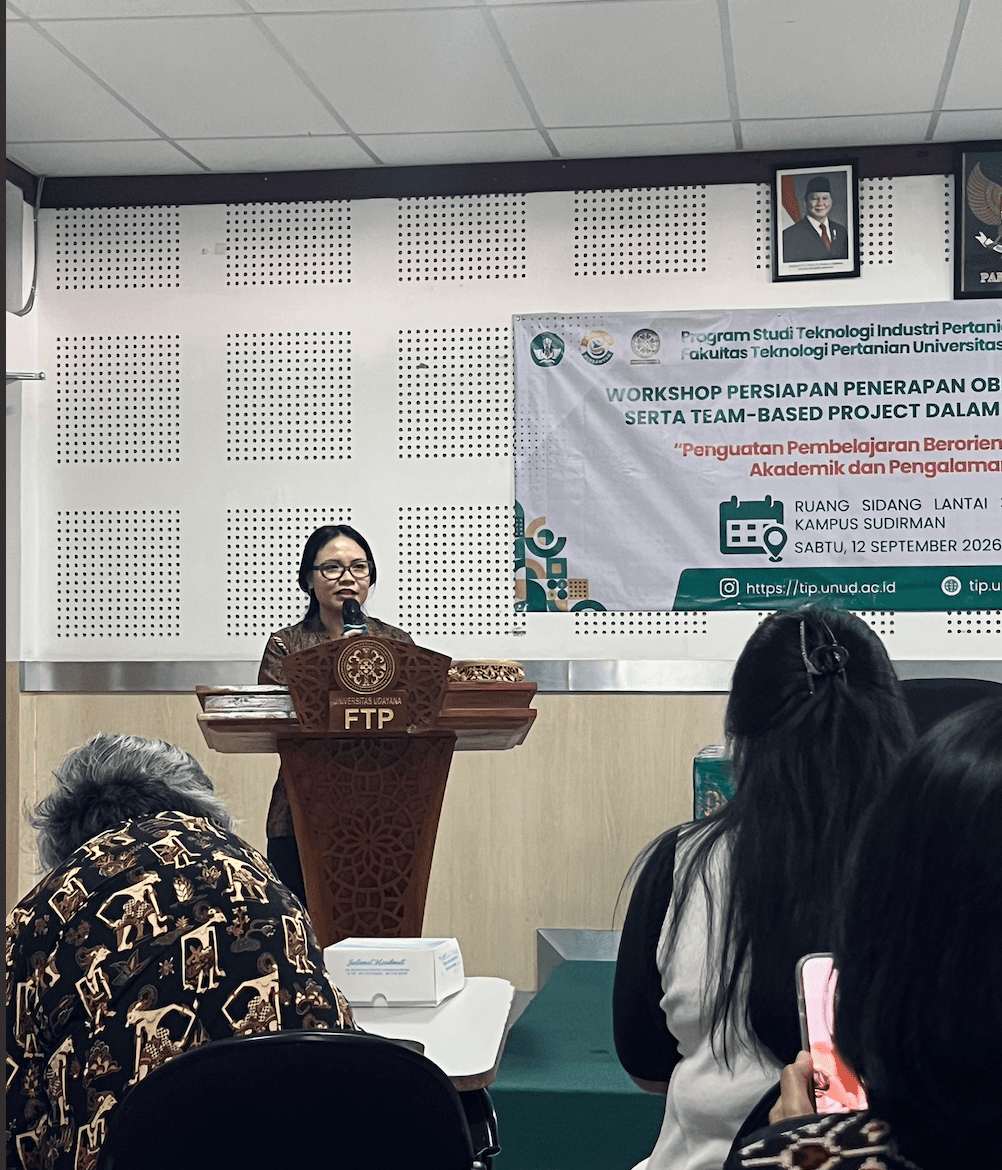
The event opened with welcoming remarks from the leadership of the Faculty of Agricultural Technology Unud, represented by the Vice Dean I of FTP Unud, Dr. I Wayan Arnata, S.TP., M.Si., followed by a report from the Workshop Committee Chair, Ni Komang Sri Budihartini, S.TP., M.TP.. Attended by faculty members, the Quality Assurance Team (TPPMP), and PS TIP accreditation administrators, the workshop featured an interactive sharing session moderated by the Coordinator of TPPMP TIP, Dr. Ir. Amna Hartiati, M.P..
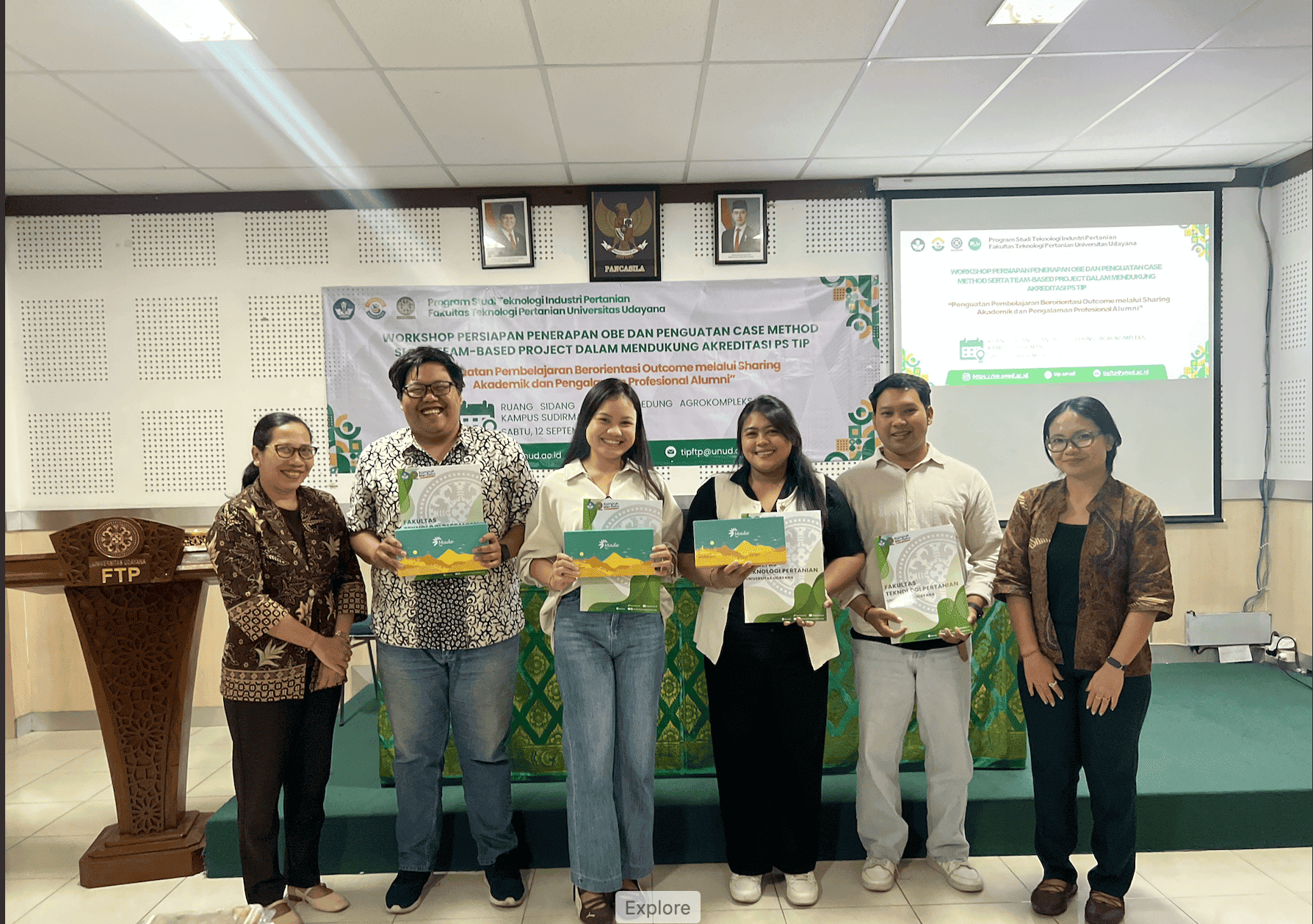
The presentation session offered a comprehensive perspective, starting with an overview of OBE-based curriculum readiness by the Coordinator of PS TIP, Dr. I Gusti Ayu Lani Triani, S.TP., M.Si., as well as data readiness for LAM-PTIP Accreditation (LKPS) presented by the Coordinator of LKPS TIP, Dr. I Wayan Gede Sedana Yoga, S.TP., M.Agb.. Furthermore, the workshop engaged PS TIP alumni from various professional backgrounds to provide direct input regarding industry competency needs:
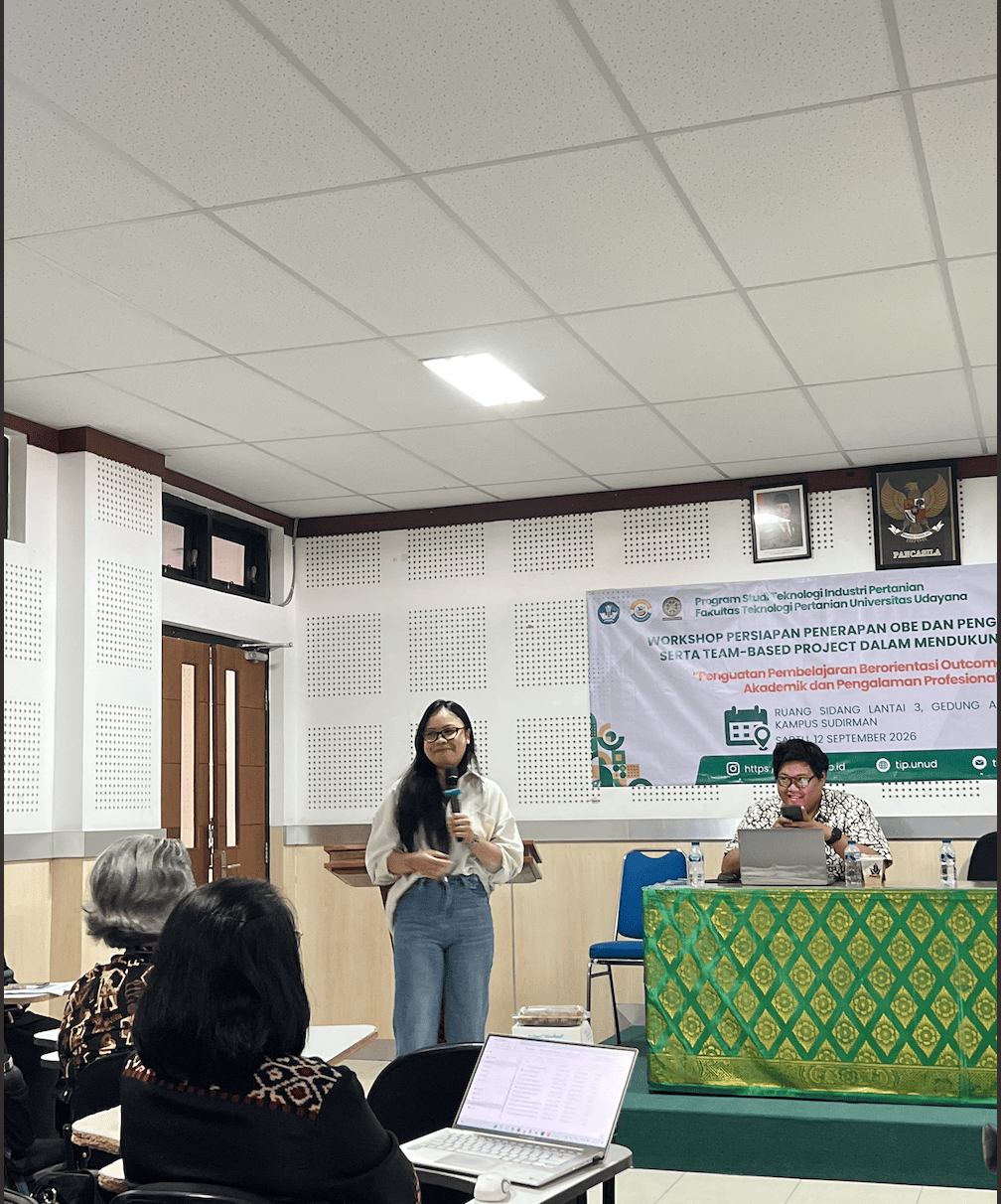
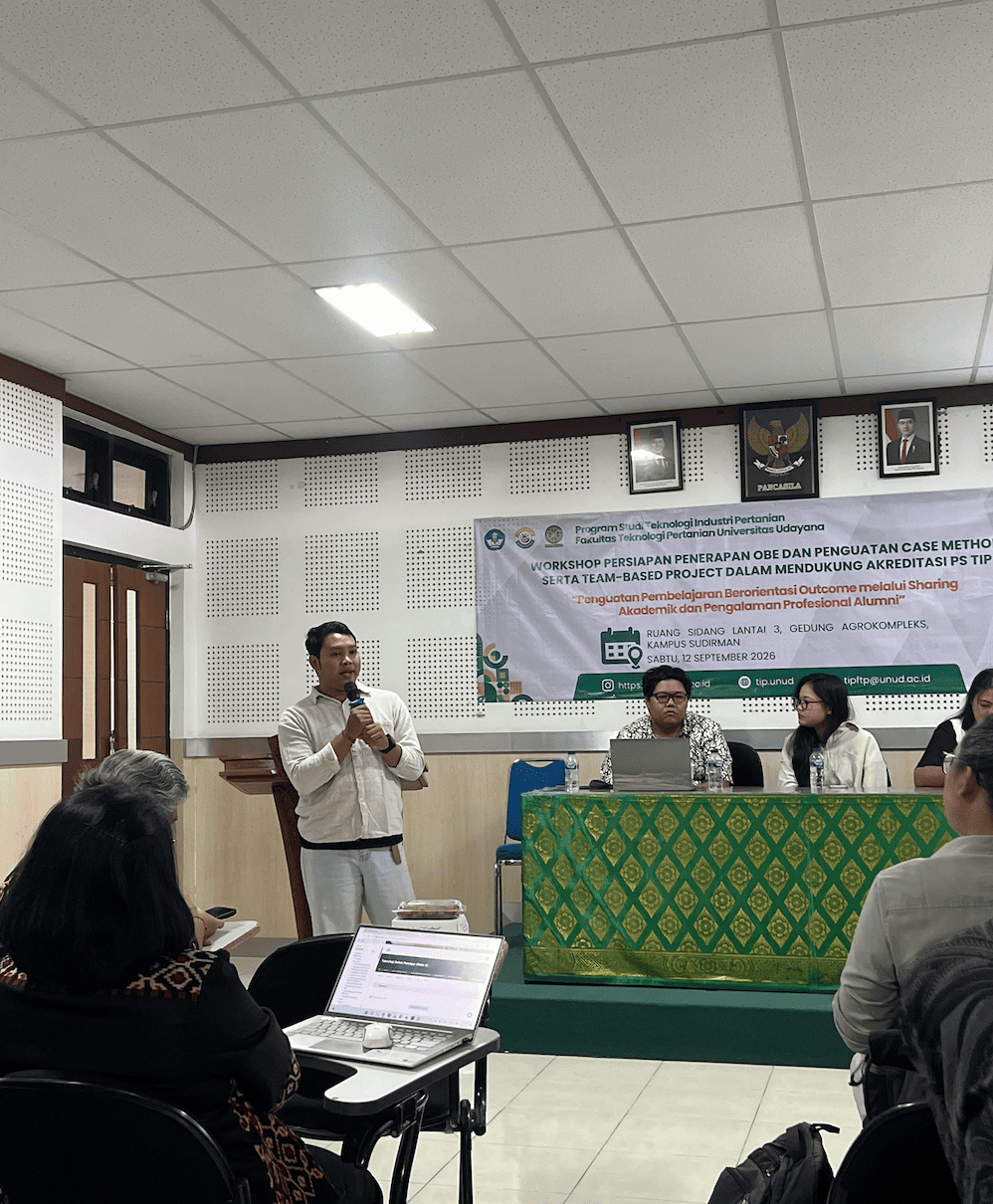
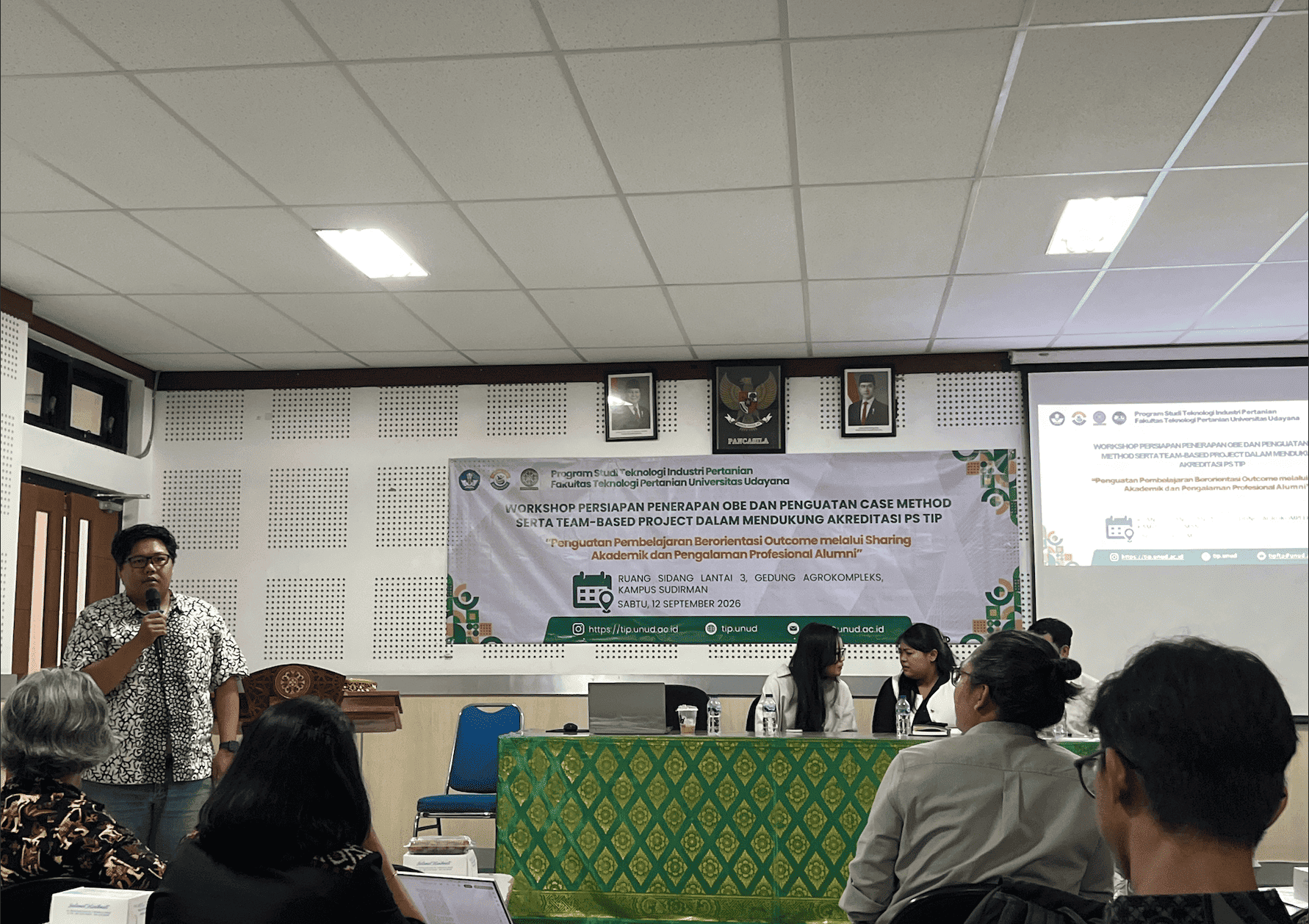
Ni Nyoman Desi Trisnadewi, S.TP., M.TP. (PT. Bali Extract Utama): Presented the integrated roles of R&D, Quality Control (QC), and Quality Assurance (QA), alongside the importance of understanding supporting certifications such as GMP, HACCP, ISO 9001/22000/17025, and sensory analysis in the natural extract industry.
I Wayan Eggy Perdana Putra, S.TP. (PT. Karsa Abadi / Made Tea): Emphasized the relevance of courses in industrial project planning and production layout, as well as the need to master modern stock management software in the herbal beverage industry.
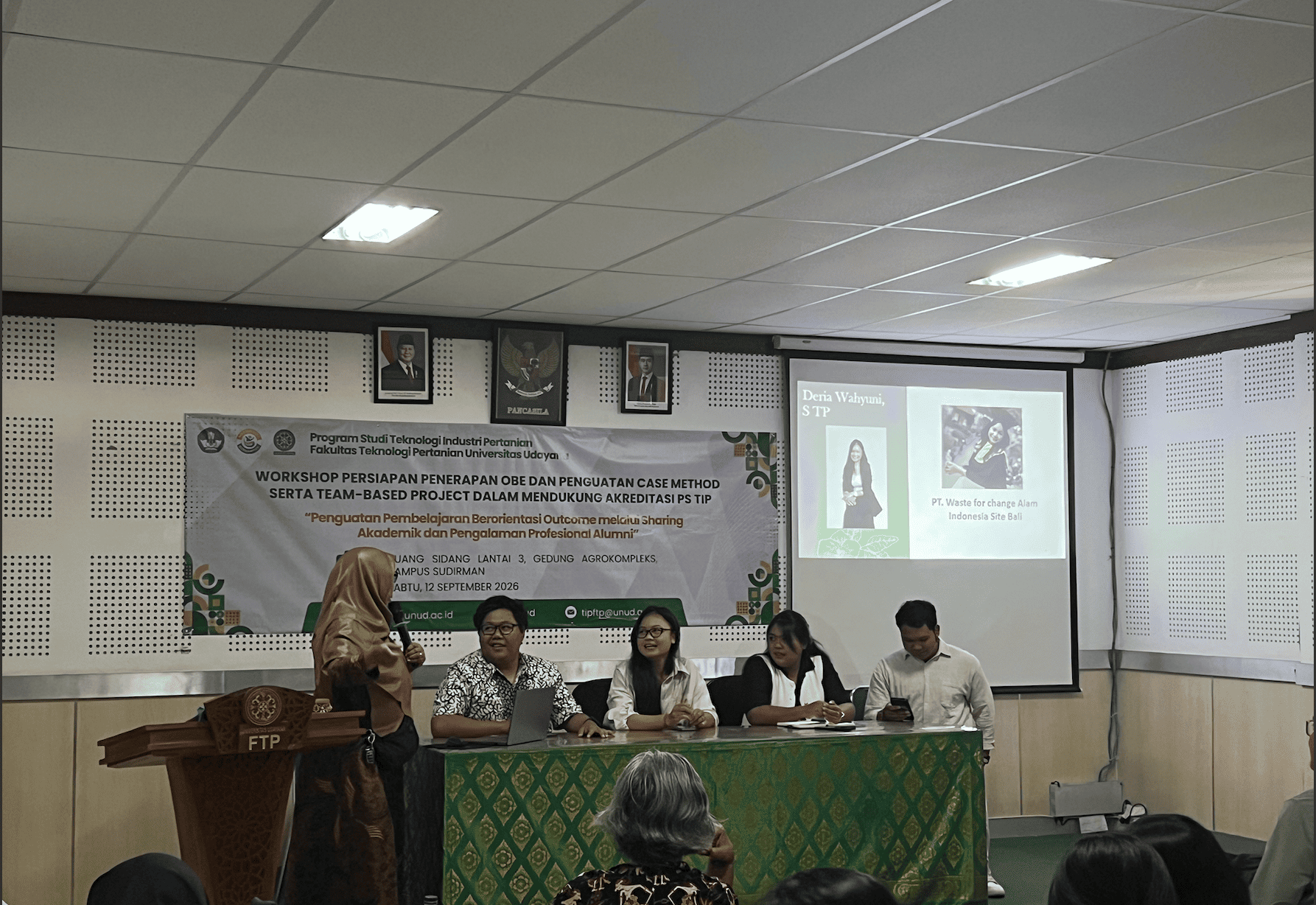
Deria Wahyuni, S.TP. (PT. Wasteforchange Alam Indonesia Site Bali / ecoBali): Shared the application of TIP expertise in inorganic and food waste management, industrial environmental management, supply chain, and field-level adaptability and problem-solving skills.
Ardhinata Antares, S.TP., M.TP. (Lecturer at ITEKES Bali): Highlighted the importance of foreign language proficiency, cross-course learning project integration, industrial field trips, and the utilization of Artificial Intelligence (AI) technology in learning assessments.
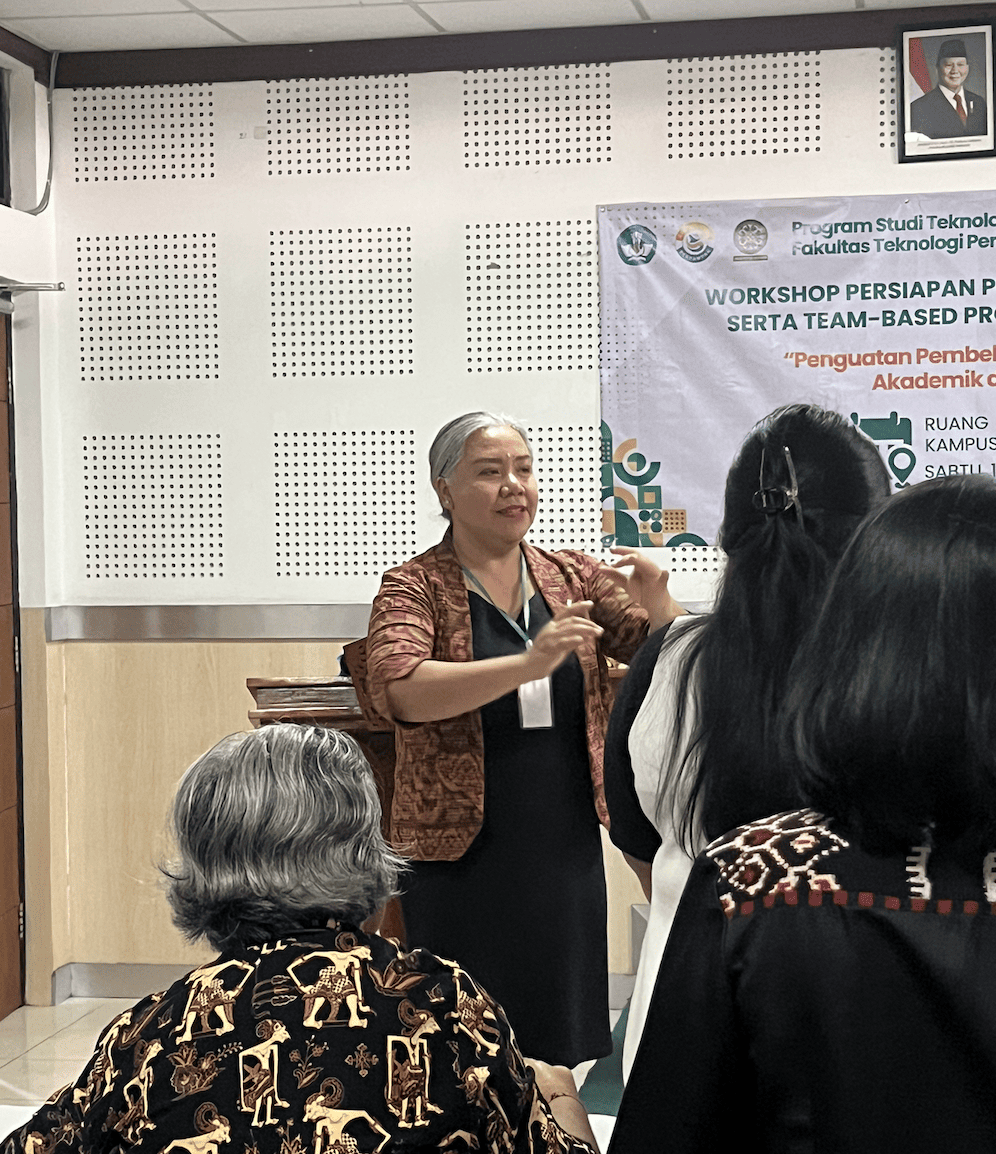
The Coordinator of the Agroindustrial Technology Study Program (Koprodi TIP) FTP Unud, Dr. I Gusti Ayu Lani Triani, S.TP., M.Si., expressed her deep appreciation for the constructive feedback delivered by the alumni and practitioners. She emphasized the vital necessity of aligning the academic curriculum with workplace realities.
"This workshop serves as a strategic milestone for PS TIP FTP Unud to ensure that the implementation of Outcome-Based Education (OBE), Case Method, and Team-Based Project goes beyond accreditation compliance, creating a tangible impact on learning quality. Direct insights from alumni working in the agro-industrial sector and academia act as a crucial mirror for us to continually align learning outcomes with real-world industry demands. We are committed to facilitating competency certifications, soft skills enhancement, and interactive teaching methods to produce superior, adaptive, and globally competitive TIP graduates," stated Dr. I Gusti Ayu Lani Triani.
The discussion proceeded dynamically, covering strategic topics such as integrating Occupational Health and Safety (K3) materials, the significance of ISO and GMP certifications, reinforcing product licensing aspects in industrial design courses, and exploring the integration of AI technologies and Life Cycle Assessment (LCA) into the curriculum.
This event functioned as a preparatory forum for gathering insights and formulating recommendations for subsequent learning development stages, without making direct changes or revisions to the current active curriculum. All documentation from this workshop will serve as primary supporting evidence for academic quality enhancement and LAM-PTIP accreditation readiness for PS TIP FTP Unud.
Gallery
FACULTY OF AGRICULTURAL TECHNOLOGY, UDAYANA UNIVERSITY